
ClinicalTrials.gov Decoded
How to Register and Report on Clinical Trials.gov Flawlessly
The FDA is no longer issuing polite reminders. With automated trackers flagging overdue records and daily civil money penalties exceeding $13,000 per violation , clinical trial disclosure is no longer an administrative checklist—it is a component of institutional risk management.
Stop treating the Protocol Registration and Results System (PRS) like a post-trial data entry task. Discover the guide to passing NIH Quality Control on your very first attempt.
Key Highlights & What’s Inside
Flawless Study Registration
- The ACT Status Decision Tree: A foolproof, 4-step framework to determine your legal obligations under 42 CFR Part 11 and avoid the danger of unregistered trials.
- The ICMJE Publication Trap: Why relying on the FDA’s 21-day grace period can get your trial blacklisted from major medical journals like NEJM and JAMA.
- The “To Evaluate” Framework: How to apply strict scientific editing principles to strip promotional language from your Brief Summary and eliminate the #1 cause of QC rejection.
- Outcome Measure Architecture: How to build endpoints using the “3-Pillar” rule (Metric, Scale/Direction, and Timeframe) so they survive manual human review.
Complex Results Disclosure
- The Deadline Clock Strategy: Master the 12-Month Rule. Learn why waiting for a signed CSR or relying on the Study Completion Date (SCD) instead of the Primary Completion Date (PCD) triggers enforcement penalties.
- The Participant Flow Ledger: Step-by-step arithmetic rules to ensure your “Started – Discontinued = Completed” tracking balances perfectly to clear automated validation.
- The All-Cause Safety Mandate: Why filtering Adverse Events through an internal corporate “relatedness” narrative triggers an automatic FDA Form 483 during a BIMO audit.
- Arm-by-Arm Threshold Calculation: How to accurately calculate the 5% non-serious AE frequency threshold to prevent critical, illegal omissions.
Crisis Management & Appendix Toolkits
- Reviewer Feedback Translation Key: Decode NIH comments regarding scale definitions and floating variables into immediate, actionable data-entry fixes.
- The Action-Location Re-Submission Format: A method for drafting resubmission notes that reduces reviewer cognitive load and fast-tracks publication.
- The “Safe Language” Cheat Sheet: A copy-and-paste library featuring an Adjective Blacklist and compliant before-and-after text templates.
- The Pre-Submission QC Checklist: A highly practical, sign-off checklist dividing administrative “auto-fails,” registration logic, and results triangulation.
Why This Guide is Essential
The National Institutes of Health (NIH) QC reviewers are very rigid. They don’t evaluate your science; they evaluate your logic, syntax, and arithmetic. A single floating verb, unanchored timeframe, or a 1% rounding mismatch across your safety tables will trigger an immediate “Major Comment” rejection—pausing your timeline and placing your compliance status in jeopardy.
Clinical Trials.gov Decoded bridges the gap between complex clinical science and rigid regulatory administration. It provides an actionable, step-by-step manual to turn protocols and Clinical Study Reports (CSRs) into flawless, QC-ready submissions.
Get Your Guide Now
Don’t let a formatting error compromise your compliance profile. Secure the definitive, operational blueprint trusted by clinical disclosure experts and medical writers
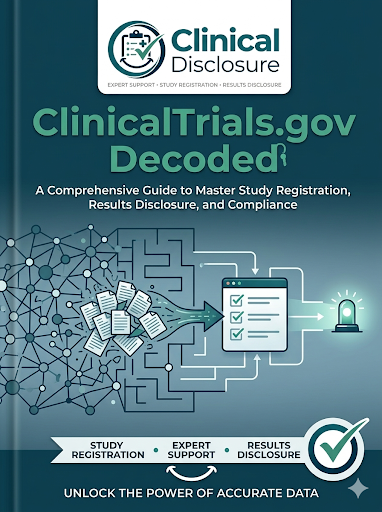
ClinicalTrials.gov Decoded
PDF download
CHF 95.00